










In the early 1930s, as talkie films gained popularity across Asia, Indian producer Rai Bahadur Seth Hurdutroy Motilal Chamria screened a Hindi film adaptation of the Arab story of Layla and Majnun in Singapore. The film quickly became a local sensation, prompting Chamria to pursue a Malay version of the tale.
To bring this vision to life, Chamria invited Balbir Singh Rajhans, a young Calcutta-born Punjabi Sikh director, better known as BS Rajhans. Although relatively unknown in India at the time, Rajhans’s arrival in Singapore was covered by the local press. In May 1933, The Pinang Gazette and The Straits Chronicle reported that the Indian director, invited to produce a Malay talkie, had arrived from Rangoon.
From the outset, Rajhans was clear-eyed about how to make a Malay adaptation of a tragic love story set in the Arab world. For his cast, he selected members of the local aristocracy, many of whom were renowned operatic performers. And while he shot the film entirely in Singapore, tailoring it for local audiences, he enriched it with authentic Arab and Egyptian music and dance sequences.
Leila Majnun was released in March 1934 during the Hari Raya Haji (Eid al-Adha) holidays, becoming the first Malay-language film produced in Singapore. It ran for a week at the iconic Alhambra Cinema (which closed in 1972), with every show getting packed audiences. In Penang too, it received a similar reception.
“Several local actors and actresses starred in the film, including Fatima Binti Jasman – a famed singer from record label His Master’s Voice – in the titular role, well-known bangsawan (traditional Malay opera) stage actor Syed Ali Bin Mansoor and Ms Tijah,” the National Library Board of Singapore wrote in a 2014 article. “Many people were drawn to watch the film because of the prior fame of these stars.”
The success of Leila Majnun inspired others in the Malay Peninsula and Singapore to pursue filmmaking. This was not just an experimental phase. As Jamil Sulong, who worked as an assistant under Rajhans, wrote in his 1990 book Glass and Diamonds: Memoirs of a Director, filmmakers like Rajhans overcame language barriers to create films that would become benchmarks for modern Malay cinema.

However, just as these quality films were beginning to make an impact, the region was invaded by the Japanese. The new occupiers imposed a ban on local film productions and screenings of Western movies in Singapore. Tragically, during this period, the only surviving print of Leila Majnun was destroyed.
At the time of the invasion, Rajhans was working on Menantu Durhaka (Unfaithful Son-in-Law). Filming was interrupted by the war, only to resume in 1945 and be released a year later. While little is known of Rajhans’s life during the occupation, he would build his reputation as a leading filmmaker on the island in the post-war era.
Indian influences
In 1947, Rajhans’s film Seruan Merdeka (The Call For Freedom) was released. Starring Salleh Ghani and Siti Tanjung Perak, the movie was noted for featuring both Malay and Chinese actors – a rare occurrence at the time – and depicted how young Malay and Chinese Singaporeans united to resist Japanese forces.
“Although the film was a commercial failure due to a lack of cinemas, and consequently, limited exposure, Seruan Merdeka marked the start of what was to become the 25-year-long golden age of Malay cinema in Singapore,” Singapore librarians Nor Afidah Bte Abd Rahman and Michelle Heng wrote in a 2015 article for BibioAsia.
During this period, which coincided with Singapore’s expulsion from Malaysia, films served as a means to promote harmony between the main ethnic groups of Malaya: Malays, Chinese and Indians.
This was also the time when many ambitious Indian directors, unable to find success in the competitive Indian film industry, relocated to Malaya, where they found a more welcoming environment for their work. This inevitably led to Malay cinema getting heavily influenced by Indian films, featuring what Rahman and Heng called “overstylized acting” and frequent song-and-dance sequences.
“Certain cultural barriers, however, proved difficult to overcome as the direct translation of movie plots, dialogues and style carried over from Indian films caused rifts between foreign and homegrown talents at MFP [Malay Film Productions],” Rahman and Heng wrote.
Rajhans was one of the talents at Malay Film Productions, a studio set up by the Shaw Brothers, who had established a film empire across Asia. When Rajhans felt that former opera actors were not suitable for his Indian-style films, the Punjabi director began to scout for fresh Malay talent in the Malay Peninsula and Sumatra.
Post-war success
As the post-war era dawned in the late 1940s, Singaporeans rediscovered their love of cinema and Rajhans became a household name. His second post-war film, Singapura Di Waktu Malam (Singapore Night), was an immediate commercial hit.
The Malay diaspora liked his works too. His 1949 romantic drama Nilam, about a young Javanese man with a magic protective dagger, found an audience among Malays in Colombo, while his other films enjoyed good runs in Medan and Bangkok.
In 1953, Rajhans directed Buloh Perindu (The Magic Flute), the first full-length colour feature film in Malaya. Shot in Perlis in the northwest of the Malay Peninsula, with the assistance of the local sultan, the production featured picturesque outdoor scenes. Using Gevacolour technology, Buloh Perindu showcased vibrant Malay costumes and cultural themes at a time before the country moved towards religious conservatism.
The Sunday Standard of Singapore in November 1953 hailed Rajhans’s ambition, noting that his journey from India to “seek fame and fortune overseas” was fulfilled with the success of the film.
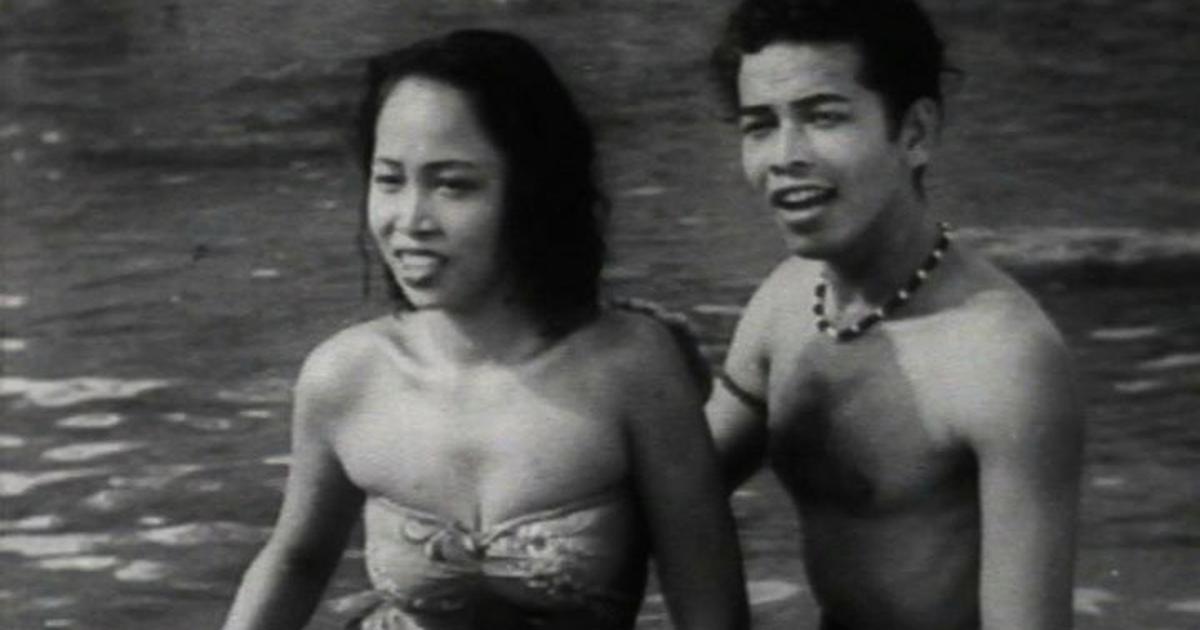
Though his movies were appreciated by audiences, critics were often less impressed. Singaporean critic Oswald Henry, reviewing Aloha, described it as a “quickie” where quantity had taken precedence over quality. In a review for the Singapore Standard, Henry wrote, “A fair attempt has been made by the director to recreate Hawaii on our shores, and a plausible story to cover up for shortcomings. As a piece of screen escapism, I fancy this film should go down well with Malay and Chinese audiences.”
Despite such reviews, Rajhans’s impact on Malay cinema was undeniable, and he is now considered an auteur.
Biggest discovery
Perhaps one of Rajhans’s most significant contributions to Malay cinema was his discovery of P Ramlee, who would go on to become an iconic figure in South East Asian cinema.
During a scouting trip in Penang in 1948, Rajhans was captivated by the voice and presence of 19-year-old Teuku Zakaria bin Teuku Nyak Puteh, a talented singer who had dazzled audiences at a Radio Malaya competition. Rajhans offered him a supporting role in the film Chinta (Love) and made him provide vocals for the lead actor.

The young man, inspired by Tamil naming conventions, abbreviated his name to P (Puteh) Ramlee. He would achieve nationwide fame after starring in the 1950 film Bakti (Devotion), directed by another India-born filmmaker, L Krishnan. His music, films and dance sequences were all heavily influenced by Indian cinema.
“Rajhans’ ability to recognise and nurture talent was instrumental in shaping the career of P. Ramlee, whose contributions to Malaysian cinema and music have left an enduring legacy,” Chandini Del wrote in an article for the Rakyat Post. “P. Ramlee’s success can be traced back to Rajhans’ mentorship and the opportunities he provided.”
Rajhans continued to pursue filmmaking throughout the early 1950s, achieving a fair degree of success. Tragically, he died from a heart attack on May 31, 1955, at age 52.
Though his death preceded the independence of Malaya in 1957, Rajhans’s legacy grew in the years that followed. As Malaysia emerged from its colonial past and began to recognise its cultural heroes, Rajhans’s contributions to Malay cinema were posthumously celebrated. His family remained in Singapore, and his wife, Mahinder Kaur, died in 2000 at the age of 93. Today, Rajhans’s work stands as a testament to the enduring cultural ties between India and Malaysia.
Ajay Kamalakaran is a writer, primarily based in Mumbai. His Twitter handle is @ajaykamalakaran.
